
Case Study
Two-Sided Marketplace MVP: From Vision to Staging-Ready
Discover how we built a staging-ready two-sided marketplace MVP. Learn credibility-first sequencing, asymmetric launch strategy, and platform cold-start solutions.
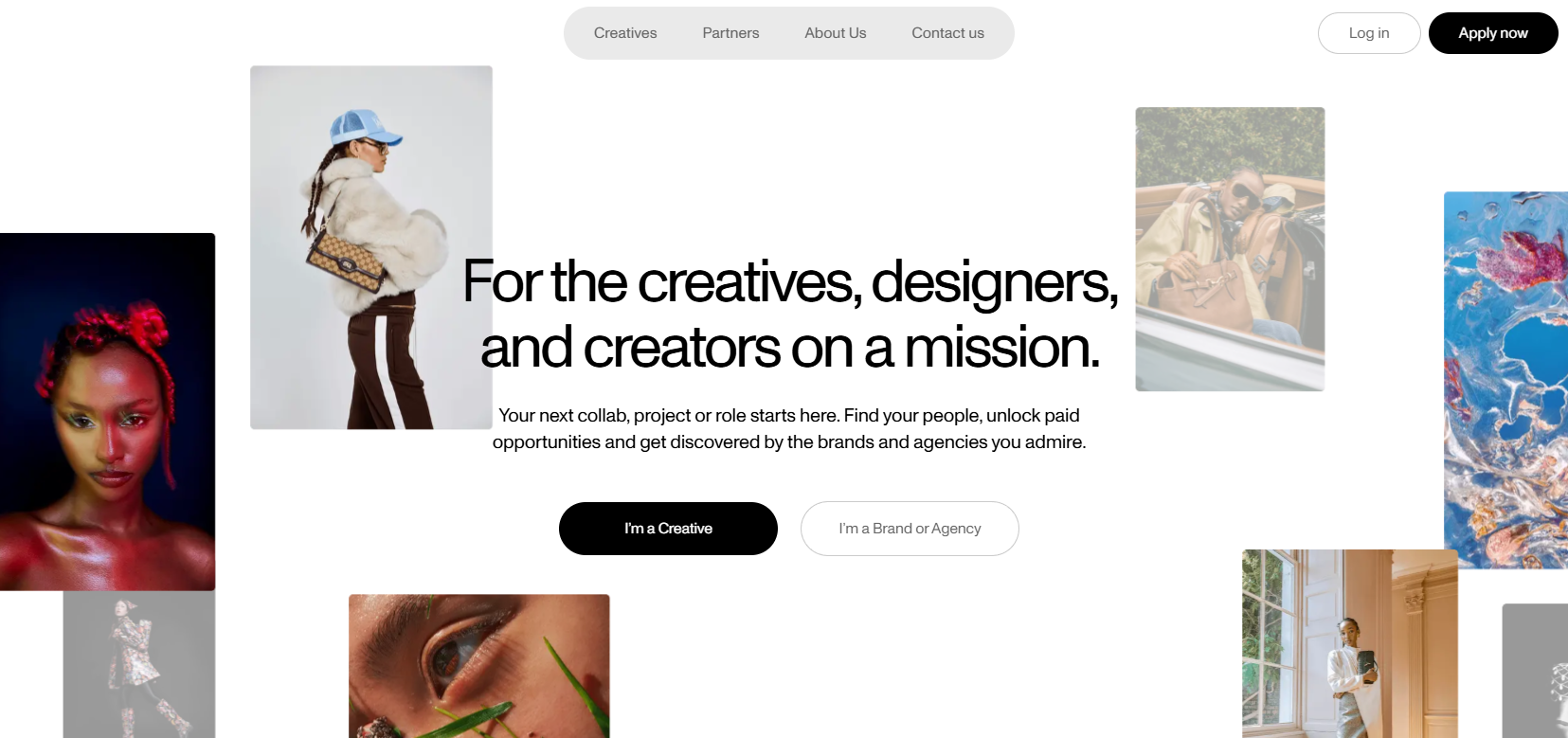
Two-Sided Marketplace MVP
From Vision to a Staging-Ready Platform You Can Actually Show
How we helped turn a long-running product vision in the creative industry into a staging-ready platform—focusing on credibility, sequencing, and real validation instead of feature completeness.
Launching a two-sided platform that people can actually trust is harder than it sounds.
After building 50+ MVPs, we’ve learned that the difficulty is not just technical—it is structural. One side wants proof that the other side exists, is credible, and is worth showing up for. Until that happens, every additional feature risks becoming expensive decoration.
This project forced us to answer a blunt question:
How do you make a two-sided platform feel real before both sides are fully live?
This case study is shared in anonymized form, but one delivery detail matters from the start. The project moved forward through a collaboration with StudioMesh. While they led the client relationship and the day-to-day coordination around the engagement, The Byte-sized focused primarily on the technical execution of the platform itself. That split gave the project a healthier rhythm: communication and alignment could keep moving in parallel with implementation, instead of collapsing into the same stream of work.
It is also why this story is useful beyond the specific industry involved. The same pattern applies to marketplaces, community-led products, expert networks, talent platforms, and any MVP where value only becomes visible once two distinct audiences start trusting the same surface.
1. The Real Problem: The Platform Existed as a Vision, Not as a Product People Could Test
The starting point was not a blank page.
The project had already gone through months of:
- product direction
- audience definition
- brand and positioning work
- early implementation and design decisions
Total project lifecycle: ~9 months
That sounds like progress. In many cases, it is. But it also introduces a specific risk: once a product has lived as a concept for long enough, teams stop asking what needs to be validated and start asking what else needs to be added.
That is usually where timelines expand, scope gets fuzzy, and the product becomes harder to show, not easier.
The core issue was simple:
- the platform had a clear identity
- the product direction was ambitious
- the intended audience was real
But it was still not in a state where you could confidently send the link to potential partners and say: this is ready for serious feedback.
That gap matters more than most teams admit. A product that cannot be shown cannot be validated. A product that cannot be validated becomes a container for assumptions.
So the real problem was not “build the platform.”
It was this:
Turn a multi-month product vision into something credible enough to test in the real world, without overbuilding both sides too early.
2. Why Two-Sided MVPs Break the Normal Rules
A standard MVP is already difficult. But at least it usually works with one core audience, one main user journey, and one obvious path to value.
A two-sided platform breaks that simplicity immediately.
In this case, the product had two distinct audiences:
- Creatives, who needed exposure, recognition, and a sense that the platform could lead to real opportunities
- Partners, who needed trust, curation, and clear proof that the platform would attract high-quality profiles rather than generic noise
Those are not small differences in wording. They imply different mental models, different anxieties, different expectations, and different conversion triggers.
Then comes the classic cold-start problem:
- creatives are less likely to join if no serious partners are visible
- partners are less likely to engage if there is no credible signal of talent quality
- both sides hesitate when the platform feels incomplete, empty, or staged
That is why so many two-sided products burn time building full feature parity across both sides. Teams assume completeness will solve the problem.
Usually, it does the opposite.
The platform gets bigger before it gets believable.
So we reframed the challenge. Instead of asking what a complete v1 should include, we asked a much harder and more useful question:
Which side has to believe first, and what is the minimum credible surface required to earn that belief?
That became the real scoping mechanism for the MVP.
Looking to apply similar credibility-first scoping to your own project? How to Scope an MVP provides a practical framework for identifying what actually needs to be validated.
3. What We Optimized For: Credibility Over Completeness
Once the problem was framed correctly, a lot of decisions became easier.
We were not trying to build a finished marketplace. We were trying to create a product state that could support real conversations, real demos, and real feedback loops.
That meant optimizing for credibility signals rather than feature breadth.
In practice, we treated five things as non-negotiable:
- One side had to feel real first. We could not afford to build both sides with equal depth from day one.
- Navigation had to support asymmetry. The platform needed separate surfaces for different audiences, without making the whole experience feel fragmented.
- Content had to be dynamic. Hardcoding content would have created friction exactly when the team needed to iterate fastest.
- Authentication had to be real. Placeholder authentication always looks harmless early and becomes expensive at the worst possible moment.
- Staging had to behave like a real product. Not a static presentation layer, not a polished mockup, but something shareable and operational.
This is the part many teams get wrong.
They optimize for completeness because completeness feels safe. It gives the illusion of progress. But in early-stage product work, completeness is often just delayed learning.
We made the opposite trade-off:
Make the product credible enough to test before making it complete enough to admire.
4. Strategic Sequencing: Why We Chose a Partners-First Credibility Layer
The decisive move in this project was not a technology choice. It was a sequencing choice.
We did not try to fully activate both sides at the same time.
Instead, we prioritized the side with the highest credibility threshold.
That meant going partners first.
Why that side?
Because in this kind of platform, partners effectively act as a validation amplifier. If the product looks serious enough for them, it starts gaining legitimacy for everyone else. If it does not, no amount of UI polish on the other side will compensate.
A partner-facing credibility layer had to communicate several things immediately:
- the platform has a clear value proposition
- the experience is curated, not chaotic
- the project has enough substance to justify a conversation
- the surrounding brand and content are not improvised
That does not require every downstream feature to be live.
It does require discipline.
By making that choice early, we avoided the most common trap in two-sided product delivery: splitting focus across too many flows and shipping a platform where neither side feels convincing enough.
5. A Shared Delivery Setup That Kept the Project Moving
An important part of this project was not just the product shape, but the way the work was carried.
The delivery did not sit inside a single studio handling every layer at once. Instead, it moved through a collaboration with StudioMesh, who remained the main interface on the client side, while The Byte-sized concentrated on translating the evolving product direction into a stable technical implementation.
That division of work mattered more than it might seem.
On two-sided MVPs, delivery can easily slow down under the weight of constant context-switching. Product discussions, stakeholder alignment, execution decisions, content changes, and technical trade-offs all compete for attention at the same time. When every thread lands in the same place, momentum usually drops.
Here, the split was healthier.
StudioMesh could keep the client conversation active, manage feedback, and maintain continuity around the broader engagement. In parallel, we could stay focused on the product surface itself: structure, flows, technical decisions, content integration, and the platform state needed to make the MVP credible.
That did not remove complexity. But it prevented complexity from spreading across every layer of the work.
It also meant the project benefited from two different kinds of control at once:
- a stronger client-facing coordination layer
- a more concentrated technical execution layer
For early-stage products, that combination is often underrated. Clear ownership does not make an MVP simple, but it does make it easier to keep moving without turning every decision into a bottleneck.
6. System Overview: A Staging Build Designed to Survive Iteration
This was not a disposable MVP. It was designed to evolve without a rewrite.
The core stack was intentionally modern and pragmatic:
- Frontend: Next.js
- CMS: Directus
- Content delivery: API-driven
- Authentication and session handling: real flows in the application layer
- Deployment target: a staging environment close enough to production to support genuine validation
Not sure what tech stack fits your MVP? MVP Tech Stack 2026 outlines the decision framework we use to choose the right tools for each project.
The important part is not the trendiness of the stack. The important part is what that stack allowed the team to do operationally.
We structured the system in three simple layers:
Experience Layer
This is where the audience-facing experience lives: pages, flows, navigation, calls to action, responsive layouts, and the overall perception of product maturity.
Application Layer
This layer handles routing, session-related logic, content rendering, and the business rules needed to make the experience coherent.
Content Layer
This is where Directus became critical. Testimonials, partner-related content, portfolio entries, static narrative sections, and future-facing content types all needed to be manageable without a developer sitting in the middle of every update.
Curious about how we approach MVP development? Learn about our MVP development process and how we help startups move from vision to validation.
That separation mattered because the MVP was not just meant to be built. It was meant to be operated.

7. Why Directus Changed the Quality of the MVP
Most MVPs treat content infrastructure as something that can be cleaned up later.
That is usually a mistake.
Early-stage products do not just need code. They need room to adjust how they present themselves while the team is still learning what actually resonates. On a platform like this, that flexibility is not cosmetic. It directly affects credibility.
Without a CMS, the obvious things start slowing down first:
- copy changes become developer tasks
- portfolio updates turn into mini releases
- testimonials, highlights, and proof points move at engineering speed instead of business speed
For this project, that would have been the wrong constraint.
The platform needed to evolve as conversations evolved. Messaging had to get sharper. Trust signals had to improve. Certain sections needed to gain depth without creating a new deployment cycle for every small adjustment.
That is where Directus changed the quality of the MVP.
It gave the product a real operational backbone from day one.
Instead of treating content as a fixed layer wrapped around the application, the team could manage and refine core surfaces continuously:
- partner-facing narrative blocks
- curated portfolio content
- about-page structure and supporting context
- future-facing content types for the creative side
That created a very different kind of staging environment.
Not just one that was online, but one that could keep improving without friction.
This is an important distinction. A technically deployed MVP can still be operationally rigid. In practice, that means it looks finished in a review meeting, but becomes awkward the moment the team needs to react to real feedback.
Directus helped avoid that trap.
It let the platform behave more like a living product and less like a polished snapshot. For a two-sided MVP, that difference matters. Credibility is not built once. It is shaped in small iterations, as the product story becomes clearer and the visible signals become stronger.
8. Information Architecture: Separate Audiences, Separate Surfaces, One Coherent Product
A two-sided platform should not feel like two unrelated websites stitched together.
At the same time, it cannot force both audiences through the same narrative path and expect clarity to emerge.
So the structure had to do two things at once:
- separate the audience journeys clearly
- preserve a coherent overall product identity
The platform was organized around distinct surfaces such as:
- a partner-facing section
- a creatives section
- an about area
- a portfolio area
This sounds obvious, but the details matter.
Each section needed to be independent enough to evolve on its own, yet integrated enough that the whole platform still felt like one product with one point of view.
That structural separation enabled something strategically important:
Parts of the product could go live at different speeds without making the rest feel broken.
This is what made the asymmetrical launch viable.
9. Portfolio as a Trust Shortcut, Not Just a Content Block
One of the hardest problems in early-stage two-sided products is density.
A new platform almost always looks emptier than the vision behind it. And emptiness kills trust faster than teams expect.
Waiting for organic user-generated content would have created a dead zone right at launch.
So instead of pretending the platform was already full, we built a curated portfolio layer that functioned as a credibility shortcut.
That solved multiple problems at once:
- it created immediate visual and narrative substance
- it reduced the perception of an empty ecosystem
- it gave partners something concrete to evaluate
- it made the platform feel intentional rather than unfinished
This matters because trust is rarely created by features alone. More often, it is created by signal quality: what the product chooses to show first, how clearly it communicates standards, and whether the visible content feels curated or improvised.
The portfolio layer did exactly that. It made the platform feel inhabited before network effects were truly live.
10. The Asymmetric Launch Strategy: What Was Live, and What Was Intentionally Delayed
The platform did not go live in a fully balanced state.
That was deliberate.
At the stage captured in this case study, the setup looked roughly like this:
- Partner-facing areas: live and credible
- About section: complete enough to support positioning and context
- Portfolio layer: live and functioning as a key trust signal
- Creative-facing area: present, but intentionally staged as “coming soon” rather than prematurely forced live
This was not a compromise born out of delay. It was a scoping decision.
By keeping the creative side visible but not artificially inflated, the product signaled movement without resorting to fake completeness.
That matters.
A weak fully live experience damages trust faster than an honest, well-scoped one.
Used properly, “coming soon” is not a placeholder. It is an expectation-management tool.
It tells users:
- the product is active
- the roadmap is real
- some parts are intentionally being sequenced, not forgotten
That is a much stronger signal than quietly shipping half-broken flows just to claim completeness.
11. What Staging-Ready Actually Meant in Operational Terms
“Staging-ready” is one of those phrases teams use loosely. We did not.
For this project, it had a strict meaning.
It did not mean:
- the interface looks nice in a review meeting
- the homepage is mostly done
- the product can be explained in a call
It meant:
- there is a real URL
- there are real authentication flows
- content is real and API-driven
- core audience navigation works end to end
- visible areas do not feel mocked or brittle
- the product can be shared without requiring a long verbal disclaimer first
That last point is the real threshold.
If you still need to explain away major gaps before someone clicks around, the product is not staging-ready in any meaningful sense.
The difference between a demo and a real product is exactly this operational readiness. MVP Demo vs Real Product explains what separates a polished presentation from something you can actually learn from.
This is why we treated staging as a real product state rather than an internal milestone. It had to be capable of carrying real external feedback.
12. Delivery Approach: Compressing Execution Without Turning the MVP Into a Prototype
Fast delivery is easy if you are willing to cut foundations. Useful delivery is harder.
The execution approach here was designed to shorten the distance between product intent and a real, testable surface—without building something disposable. The collaboration model helped here too: client-side continuity and technical execution could progress in parallel, instead of competing for the same attention every day.
In practice, that meant working through tight loops:
- clarify the minimum credibility layer
- define the essential content and surfaces needed to support it
- connect those surfaces to real content workflows
- deploy to staging early
- use that environment to support actual partner-facing conversations and internal decision-making
The value of this rhythm is not speed for its own sake.
It is the reduction of waste.
Every time a team spends weeks polishing unvalidated features, it creates a polished version of uncertainty. Tight loops force the opposite: expose assumptions faster, then decide what deserves deeper investment.
13. What We Built, and What We Deliberately Did Not Build
One of the reasons the project stayed strategically useful is that we were willing to leave meaningful things out.
What We Built
We focused on the highest-impact layer needed for credibility and early validation:
- a multi-audience frontend structure
- Directus-backed content workflows
- dynamic trust-building content
- a curated portfolio layer
- real authentication flows
- responsive, mobile-conscious UI
- clear navigation paths for each audience surface
What We Did Not Build Yet
Equally important are the things we intentionally postponed:
- deep matching logic between both sides
- advanced search or discovery systems
- a full creative onboarding journey
- partner dashboards or internal CRM-like layers
- secondary automation or analytics complexity beyond what early validation required
Why leave these out?
Because none of them improve the first-order question:
Will the right people take the platform seriously enough to engage?
Until that question starts getting answered with real signals, expanding scope is mostly an expensive form of optimism.
Building something similar? Our product development services help teams turn ambitious visions into staged, testable products.
Building something similar? Our product development services help teams turn ambitious visions into staged, testable products.
14. What We Were Actually Trying to Validate
At an early stage, teams often reach for the wrong metrics.
They talk about engagement, retention, or growth curves before the product has even crossed the threshold of basic credibility. That is backwards.
At this stage, the relevant signals were more fundamental:
- do partners take the product seriously when they see it?
- do they understand what the platform is trying to do?
- do they feel the experience is curated enough to justify a follow-up conversation?
- does the visible portfolio layer create confidence, or does it feel decorative?
- does the staged creative side create anticipation, or does it create doubt?
Only once those questions start resolving positively does it make sense to invest more aggressively in deeper platform mechanics.
This is why early validation for a two-sided product is often less about dashboards and more about reaction quality. Not vague opinions, but specific reactions, objections, and next-step behavior.
15. Risks We Avoided by Keeping the Scope Sharp
A good case study should not only explain what was built. It should also explain what was prevented.
In this project, keeping the scope sharp helped avoid several common failure modes:
Building Both Sides Too Early
This would have doubled coordination cost, widened the testing surface, and likely produced two half-convincing experiences instead of one credible one.
Shipping Fake Density
Artificially inflated content or placeholder user presence might have made the interface feel fuller in screenshots, but it would have weakened trust the moment serious stakeholders looked closer.
Hardcoding Trust Signals
If key content had lived in code, every iteration on the story would have slowed down. That would have made the MVP much less useful operationally.
Treating Staging Like a Decorative Milestone
A platform that is “almost shareable” is not shareable. Setting a higher bar for staging kept the team honest about product readiness.
Expanding Scope Before Signal Quality Improved
It is always tempting to add more: dashboards, search, onboarding, richer profiles, analytics layers. But until the platform crosses the threshold of believability, those additions mostly increase complexity without improving learning speed.
16. The Reusable Playbook Behind the Project
The real output of this work is not just the platform state itself. It is the execution pattern.
That pattern can be reused across other two-sided or trust-sensitive MVPs.

1. Identify the Credibility Bottleneck
Which audience needs the highest level of confidence first?
2. Build Asymmetrically on Purpose
Do not assume fairness between both sides creates better validation.
3. Make Content Operational From Day One
A CMS is not a luxury in this context. It is what keeps iteration fast and strategic.
4. Use Curated Substance to Overcome Early Density Problems
Portfolio, proof points, references, and trust signals matter more than breadth early on.
5. Treat Staging as a Real Product State
If the link cannot be shared confidently, the product is not ready for useful feedback.
6. Delay Second-Order Features Until the First-Order Belief Problem Is Solved
Matching, search, deeper onboarding, and dashboards can wait. Credibility cannot.
17. What Happens Next: From “Can We Show It?” to “Does It Convert?”
Once the platform reached a genuinely staging-ready state, the nature of the work changed.
The question was no longer whether the surface existed. The question became whether that surface could change behavior.
For a product like this, that next phase usually follows three tracks.
Partner-Side Validation
Use the staging product in real conversations. Watch where interest increases, where hesitation appears, and which parts of the platform do the most work in building trust.
Creative-Side Activation Planning
Define the smallest credible version of the creative experience. Not the full vision, and not a feature-heavy rollout—just the minimum needed to activate that side without weakening the quality bar already established.
Narrative and Content Refinement
As conversations happen, the story around the product gets sharper. Messaging changes. Proof points become clearer. Some sections gain weight; others need simplifying. That is exactly why the content layer matters so much.
This is the phase where a platform stops being something you can finally show and starts becoming something you can actually learn from.
That is the shift we were aiming for from the beginning.
If you are building a two-sided product and need to reach a staging-ready state that is credible enough for real conversations—not just internal demos—we can apply the same playbook to your product.
Metrics Snapshot
| Signal | Result |
|---|---|
| Project lifecycle | ~9 months |
| Product type | Two-sided platform |
| CMS backbone | Directus |
| Dynamic content workflows | ✓ |
| Portfolio layer in staging | ✓ |
| Multi-audience architecture | ✓ |
| Asymmetric launch strategy | ✓ |
About Byte-sized
Byte-sized is an Italian boutique product studio that helps founders and SMEs turn ideas into real software—starting with MVPs built to learn fast from the market. We ship small but complete releases, keep scope and roadmaps clear, and reduce product and technical risk.
Want to build a two-sided platform that reaches staging-ready credibility—without overbuilding?
Related Content
Continue Learning
- How to Scope an MVP — Scoping around signals, not features
- Measure MVP Success Metrics — Delivery + product metrics in practice
- MVP Roadmap Timeline — From discovery to launch in 4-8 weeks
- MVP Demo vs Real Product — What separates a demo from a real product
See Another MVP Example
- EVOC: Crowdsourced Territorial Intelligence — Signal-first crowdsourcing with validation loops
- LyLife: Healthcare MVP in 30 Days — Fast validation in a different domain
- Creative Two-Sided Marketplace Platform — This case study (you are here)
CTA
Next step — Ready for the next byte?
If you’re building a platform where two audiences depend on each other before value becomes visible, we can help you make it credible before it’s complete.
→ Book a call
→ Explore services
→ Read Launchpad
Next step
Ready for the next byte?
Turn this framework into a scoped MVP plan with a tight delivery loop.